
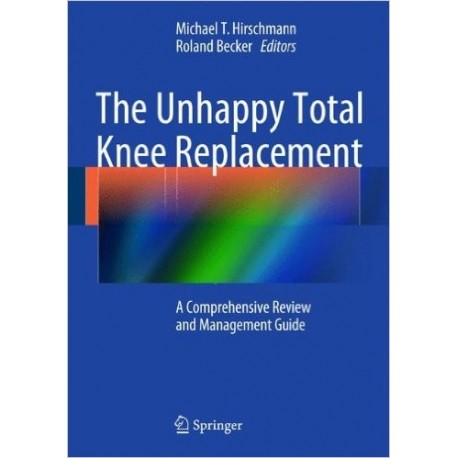

THE UNHAPPY TOTAL KNEE REPLACEMENT
9783319080987
Más información
Description
This book addresses the need for improved diagnostic andtreatment guidelines for patients in whom total knee arthroplasty (TKA) has hadan unsatisfactory outcome. It opens by discussing the basics of TKA and thevarious causes of failure and pain. Diagnostic aspects are considered indetail, with attention to advances in clinical investigation, laboratoryanalysis and in particular, imaging techniques. In addition, helpful state ofthe art diagnostic algorithms are presented. Specific pathology-related treatmentoptions, including conservative approaches and salvage and revision TKAstrategies, are then explained, with identification of pitfalls and key points.A series of illustrative cases cover clinical scenarios frequently encounteredin daily clinical practice. The evidence-based, clinically focused guidanceprovided in this book, written by internationally renowned experts, will assistsurgeons in achieving the most effective management of these challenging cases.
Feature:
- Clearly explains the causes of failure of TKA and associated pain
- Presents state of the art clinical and radiological diagnostics and helpful algorithms
- Describes specific pathology-related treatment options including salvage and revision TKA strategies
- Includes a case series covering clinical scenarios frequently encountered in daily clinical practice
- Highlights pearls and pitfalls
Contents
Basics of total kneereplacement: Anatomyand biomechanics of the knee after total knee arthroplasty.- Biology of theknee after TKA- the neglected potential or source of failure?- There is anoptimal axial alignment in TKA- rotation does matter!- There is an optimalalignment of the TKA- tibial rotation does matter!- Gap balancing in total kneearthroplasty- the US perspective.- Design, shape, and materials of total kneearthroplasty - What works well, what does not.- Patellofemoral complicationsand mal-tracing in TKA are influenced by what?- Image analysis- new ways toimprove the diagnosis in patients after TKR.- How can preoperative planing preventoccurrence of a painful TKA? Causes of pain after TKA: Avoiding WoundComplications in Total Knee Arthroplasty- Failure of the TKA implant.-Periprosthetic fractures following total knee replacement- an epidemic problemon the rise!- Malposition and malorientation of TKA.- The problem of under- oroversizing of TKA.- Instability of TKA.- Extensor mechanism deficiency in TKA.-Causes and diagnosis of aseptic loosening after TKA.- Infection after TKA.-Allergy and hypersensitivity to implant materials in patients with TKA: anallergological approach.- Stiffness after total knee arthroplasty.- The unhappyTKA: Reducing the impact of psychological factors on outcome.- Impingementafter TKA. Diagnostics: MedicalHistory and physical examination.- Laboratory analysis in the assessment ofpainful total knee a rthroplasty.- What do the radiographs tell us?- CTdetermination of component orientation and position in patients after TKA.-Magnetic resonance imaging in knee arthroplasty.- The diagnostic value of SPECT/CTin the unhappy total knee arthroplasty- a potential for better diagnosis!-FDG-PET in patients with total knee arthroplasty - what is the evidence?-Fluoroscopy and stress radiographs diagnosing laxity/instability in patientsafter TKA.- Biopsy, joint puncture, diagnostic arthroscopy.- A diagnosticalgorithm for patients with painful total knee arthroplasty what to do when?-Algorithm for the management of patients with painful total knee arthroplasty Treatmentprinciples - Conservative treatment: Management of patients withpainful total knee arthroplasty: A multimodal approach.- Pain after TKA- whenis a conservative treatment possible?- Radiosynovectomy.- Physical therapy,alternative treatment options, braces/orthotics.- Treatmentprinciples -Surgical treatment: GeneralPrinciples.- Exposure for revision TKA.- Intraoperative landmarks in revisionsurgery- when to choose what?- Arthroscopic treatment of patellofemoral softtissue impingement after posterior stabilized total knee arthroplasty.- Arthroscopicor open treatment of stiff knees after TKA.- Treatment of aseptic loosening.-Treatment of Instability after TK.- Cementless versus cemented revision TKA.-Use of stems in revision TKA.- Ligament and gap balancing in revision TKA.-Unusual causes of failure and unexpected complications.- My algorithm treatinginfection after TKA.- My special case of infection after total kneearthroplasty.- Joint line restoration in revision surgery.- Treatment ofpatellofemoral pain after TKA.- Hinged implants for revision TKA.- Themanagement of bone loss in revision TKA.- My experience with diagnosis andtreatment of extensor apparatus insufficiencies.- Low-grade infection aftertotal knee arthroplasty.- Treatment of infection after TKA- one stage versustwo stage.- Navigated revision arthroplasty- what is the benefit?-Periprosthetic fracture treatment in TKA.- Salvage procedures in revision TKA.- Futuredevelopments and perspectives. Case discussion.
Authors
Michael T. Hirschmann, MD, is head of Knee Surgery at KantonsspitalBaselland (Bruderholz, Liestal, Laufen). He trained at the University of Mainzin Germany, graduating in 2004. He then worked from 2004-2006 as registrar atthe Departement of Surgery at University of Basel. His orthopaedic residencywas spent at Bruderholz Hospital and Kantonsspital Baselland under theleadership of Professor Dr. Niklaus Friederich. He became a board certifiedspecialist in Orthopaedic Surgery in 2011. He completed a 12 months clinicaland research fellowship at the Imperial College London, UK under Prof. JustinCobb and Prof. Andrew Amis. In addition, he spent a 3 months knee fellowship inMelbourne, Australia with John Bartlett. Michael went on several fellowshipssuch as the ESSKA-APOSSM Travelling Fellowship 2012, the AGA EuropeanArthroscopy Fellowship 2011 and the EFORT Visiting Fellowship 2010, which hespent with Dr. Timo Järvelä in Tampere, Finland. For his research he wasawarded numerous awards such as the Swiss Quality Award 2013, the ESSKA BasicScience Poster Award 2012, 2nd AGA Poster Award 2013 and the EANM YoungInvestigator Award 2013. His research focus has been on diagnostics andtreatment of knee injuries involving the cartilage, meniscus or ligaments,diagnostics and treatment of patients with OA and in particular on unhappypatients after knee arthroplasty surgery. Another major research focus lies onthe evaluation and development of 3D imaging such as CT, MRI and SPECT/CT onorthopaedic purposes. He published numerous original articles and book chaptersin these areas. Michael has been a member of ESSKA since 2007 and has beenactive in the ESSKA arthroscopy and cartilage committee. He is also a member ofAAOS, ACL Study Group, AGA, DGOOC, DKG,EKA, EORS, GOTS and ISAKOS. In September2012, he was appointed an Ass. Professor (PD) at the University of Basel,Switzerland.
Roland Becker is Head of the Centre for Orthopedics andTrauma Surgery, Klinikum Brandenburg (Municipal Hospital Brandenburg),Brandenburg, Germany. Dr. Becker graduated in medicine from the MedicalAcademy, Magdeburg, in 1992 and received his board certification in Orthopedicsin 1998 and in Orthopedics and Trauma Surgery in 2006. He received hisHabilitation and venia legendi for Orthopedics and Sports Traumatology in2003 and was appointed Associate Professor at Otto von Guericke University,Magdeburg in 2011. Dr. Becker has held various leading positions in medicalscientific societies, including as President of the Gesellschaft fürArthroskopie und Gelenkchirurgie (Society for Arthroscopy and Joint Surgery), amember of the Board of Directors of European Knee Associates (of ESSKA) and amember of the Knee Committee of the International Society of Arthroscopy, KneeSurgery and Orthopedic Sports Medicine (ISAKOS). Dr. Becker has published 68articles in peer-reviewed journals and ten book chapters.
Reseñas
No hay reseñas de clientes en este momento.
10 otros productos de la misma categoría:
-
KIT DE CRIOTERAPIA CRY-AC 0.3 L
1 025,00 €
-
LAPARO ASPIRE VER. MEDIUM. LAPAROSCOPIC TRAINER
680,50 €
-

ADAPTADOR DE CORRIENTE ELECTRICA OMRON M2, M3, M6 IT, M7, M10 IT
19,80 €
-
FUNDA FONENDOSCOPIO CARE COLLECTION
9,95 €
-
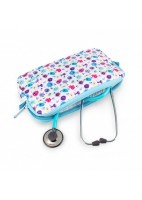
FUNDA FONENDOSCOPIO VIRUS COLLECTION
9,95 €
-
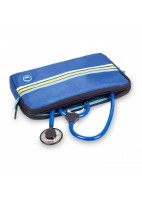
FUNDA FONENDOSCOPIO EIGHTIES COLLECTION
9,95 €
-

GUIA PRACTICA PARA PROFESORES DE MEDICINA
72,20 € -5% 76,00 €
-

LAPARO ASPIRE VER. ESSENTIAL LAPAROSCOPIC TRAINER
638,28 €
-

FUNDA FONENDOSCOPIO ORGANOS
9,95 €
-
ESTUCHE FONENDOSCOPIO CON SOLAPA INTERIOR
19,95 €


LibreriaMedica.es
 Conócenos

Estudiantes
 Estudiantes